

REFLECTIONS
A Note on the Journey
My work over the past seasons has been deeply shaped by the writings of Bernadette Roberts. Her articulation of the interior journey gave language to experiences I trusted but could not yet name. For that, I remain profoundly grateful.
What is unfolding now is a pivot from that year with her. The blog will still be reflective in nature, but focused on different material. Something lived more explicitly in the body, in relationships, and in the ordinary moments where patterns reveal themselves and something new becomes possible.
I find myself at a threshold. There is energy here, curiosity, creativity, a sense of alignment, and also a necessary unknowing. Rather than certainty, what feels most faithful is attention.
In this season, my writing and work are pivoting toward presence as a lived reality, often through the lens of the Enneagram, not as a system to master, but as a doorway into embodiment, awareness, and honest engagement with life as it is.
This space will continue to reflect on the inner journey, but with a growing emphasis on how that journey shows up in real time: in the body, in conflict, in growth, and in the courage it takes to stay present when old strategies no longer serve.
If you are sensing a threshold of your own, you are welcome here.
God Immanent in Man - Paragraph 2
Advent and the winter solstice invite us into a quieter way of knowing. A slowing. A listening beneath words and images.
In this week’s reflection, I return to Bernadette Roberts and her insight that God does not arrive as an image or idea, but as that which accesses the core of our being. What meets us there is often subtle, wordless, and deeply embodied—known before it is understood.
This is not a spirituality we generate. It is something that approaches us. And our work may be as simple, and as difficult, as paying attention.
I explore how this kind of knowing intersects with contemplative practice, the Enneagram, and the courage to remain present in the dark season, trusting that something real is already at work.
God Immanent in Man - Paragraph 1
When the Presence that lives within us feels more like a black hole than a light, how do we trust it? This week I explore both Roberts and Metz on the terrifying grace of the unknown, and the quiet beckoning that can reshape a life from the inside out.
God in Nature - Paragraph 18
This week’s reflection explores the facets of the holy, the art of naming our experience with clarity, and the gentle invitations that arise when we’re finally moving slowly enough to feel them.
God in Nature - Paragraphs 16 and 17
A contemplative reflection on Roberts’ teaching that God is the very source of existence. Explores how this Mystery exists us, how personality patterns obscure it, and how to return to a lived awareness of divine presence.
God in Nature - Paragraph 15
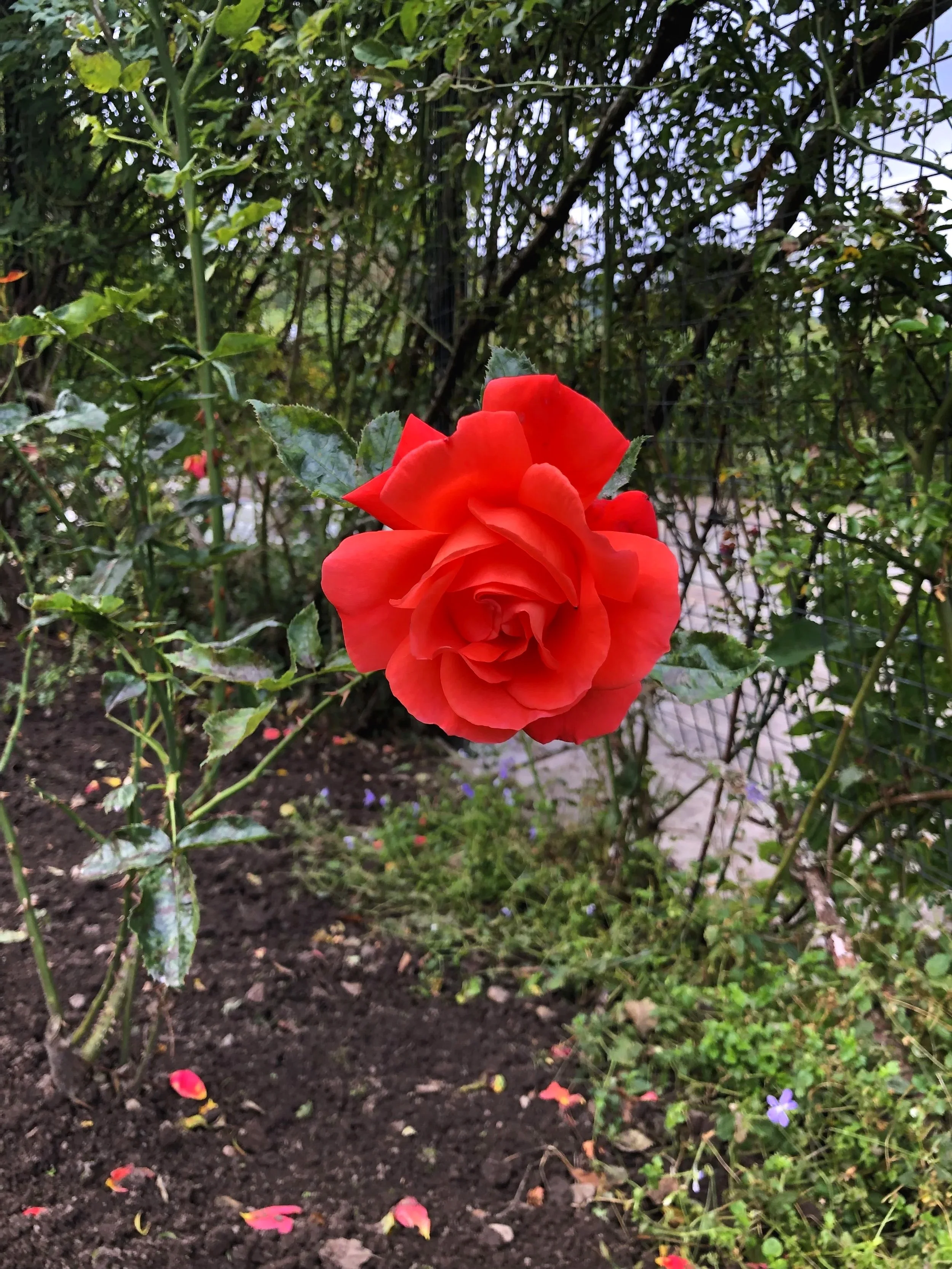
And perhaps that’s where this ancient revelation can become most alive for us, in realizing that God-in-nature is not just in the forest or the sea but in the ordinary, changing landscapes of our lives. The sacred does not withdraw when we’re busy or burdened. It moves with us, within us, waiting for recognition.

God in Nature - Paragraphs 13 and 14
In her writings on Omnipresence, Roberts invites us beyond “God within” toward the deeper mystery that all things exist in God. What if there is only one thing happening, one divine life expressing itself through everything, including us? In this reflection, I explore Roberts’ luminous insight alongside Mary Oliver’s reminder that prayer begins in the ordinary, where every breath, stone, and silence becomes a doorway into the divine.

The Unfinished Self: Embrace Your Lifelong Project
Have you ever noticed how our world encourages constant acquiring, equating “more” with “better”? This belief shapes how we approach personal transformation as we often think it’s about gaining something new.
In reality, transformation is about letting go and discovering what is already within us. Rather than accumulating, transformation is the process of moving from doing to being, of uncovering our true nature.
God in Nature - Paragraphs 11 and 12
Yes, for today it is enough to just be with what is arising in my experience, whether that be grief, sadness, joy or delight. The journey is to be awake to it all and what a delight that we are granted such a gift. Today I am grateful for the opportunity to experience life fully. I do believe that is what Jesus meant by an abundant life.

God in Nature - Paragraphs 9 and 10
What this text invites me into is a continued journey towards clarity. For those of you who know the Enneagram you know that the Enneagram Nine can be diffuse and even foggy, not only in their thinking but in their expression of life. As a Nine, this is true for me, and I have practiced bringing more presence, thus more clarity, to conversations, events, and life so that I can actually discern what is happening and respond appropriately. It is a process, like learning a whole new skill set, but one that is very exciting when I remember to do it.
God in Nature - Paragraph 8
The impact and invitation this has for me is to continue, like the Stoics, to practice releasing those passions, distractions, and thought patterns that cloud the center. Those mechanical, and dare I say even maniacal, ways of being that grab all my attention away from the center. These attention grabbers need to be seen through and dealt with. Some of these attention grabbers are easy to let go of while others are very difficult, so ingrained our habitual patterns are. For these tougher cases therapy, spiritual direction, or some help, care and compassion of another is needed in order for us to face and breathe through the release.
God in Nature - Paragraph 7
This concept of the “eternally nameless” aligns with much of what Roberts has previously described concerning God and also echoes what the Christian mystics describe in their experience of Omnipresence. That alignment includes the notion that God (Tao) is not a thing but a what, something fundamental to the underpinnings of what we call life and the universe. I’ve heard it explained that similarities between all the great mystical faith traditions are like the spokes of a wheel. The farther out you are from the center the more differentiation you notice, both in practice and doctrine, but as you travel down the spokes towards the center you end up in much the same place. You end up with Love extending out in all directions.

God in Nature - Paragraphs 5 and 6
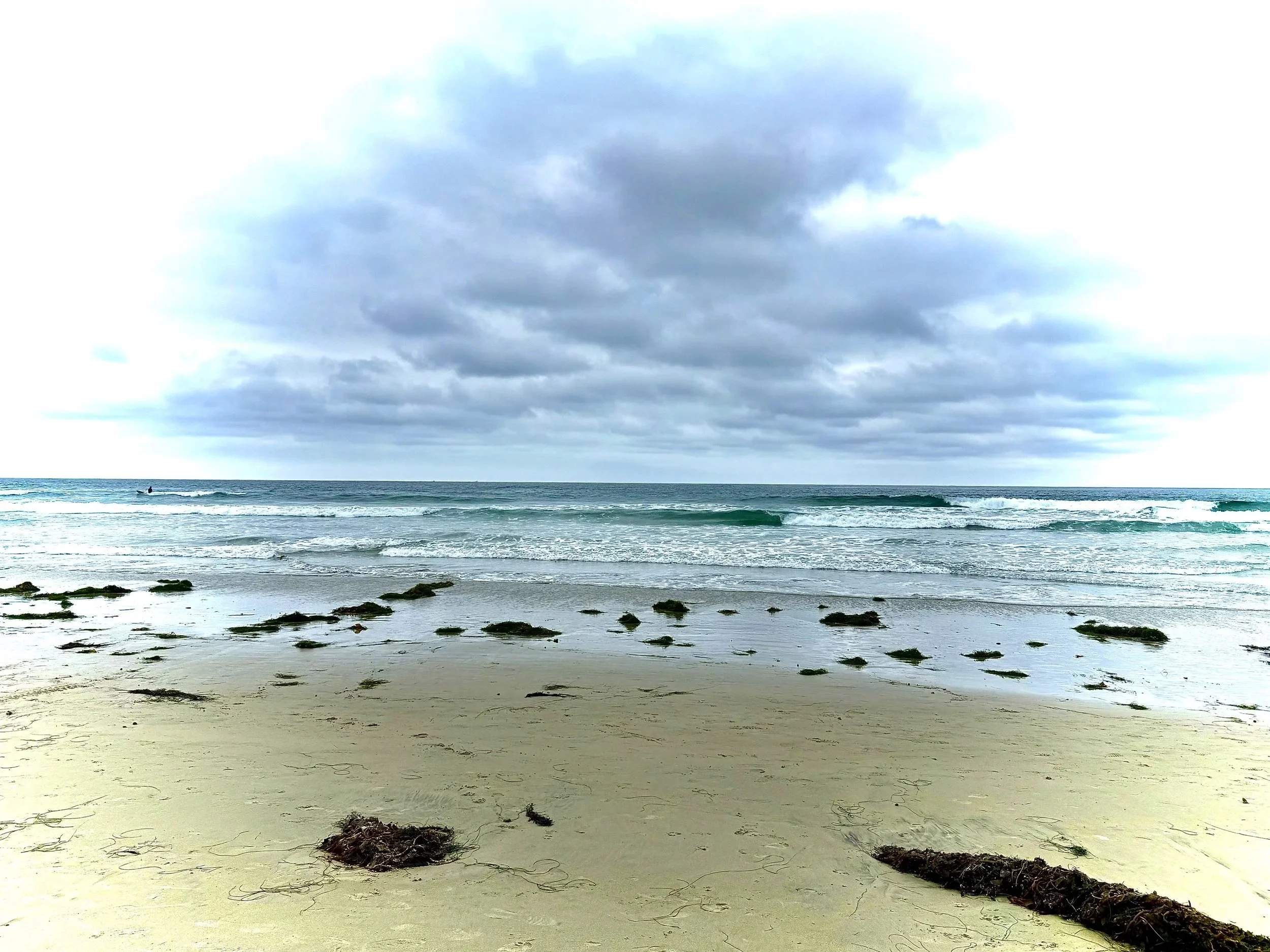
I’m in absolute agreement that people see It all the time. As she says, the simplicity of it seems so innate that we take for granted that which is a great seeing. I honestly believe that most everyone have had moments of transfixed seeing; the beauty of the sky speaking to you, the calming tranquility of the sea’s presence, a baby’s innocence melting your heart, morning bird song preparing you for the day. We know in those moments something revelatory is occurring even though we can’t say exactly what is occurring.